

Key Takeaways
- Virtual corporate events that follow predictable, copy-and-paste formats can feel forced rather than fun, leading to low participation and disengagement.
- The most effective virtual events for companies prioritize shared experiences, light competition, and flexible, low-pressure participation.
- Spicing things up with creative formats, such as teach-us-something presentations, show-and-tell, and online multiplayer games, can create more natural interaction and stronger team connections.
- Incentivizing participation through raffles or prize-based challenges can increase engagement while maintaining a relaxed and enjoyable atmosphere.
The Importance of Well-Planned Virtual Events at Work
About 78% of U.S. employees with remote-capable jobs take advantage of their opportunity to work off-site. On the one hand, it is great that they cash in on this unique perk; however, it can make it harder for them to organically get to know their coworkers on a fun, personal level, which is a vital part of team bonding.
As a result, entertainment-focused virtual events have become a core part of modern work environments. With the right virtual event planning, these gatherings can make employees more connected to their jobs and coworkers, which is associated with 70% higher well-being and 23% higher profitability. However, uninspired, copy-and-paste virtual corporate events can have an adverse effect.
As a member of the Kewl Committee, collystring’s event-planning and employee engagement team, I’ve put together the guide below to help you avoid some of the most common mistakes in recreational corporate events. I’ll also explore how our team naturally encourages participation through relaxed, low-pressure virtual event formats and a splash of friendly competition.
Common Issues with Virtual Events for Companies
As a senior manager of paid social, I know how persuasive certain short-form videos can be, including those featuring ideas for virtual events for work. Although it is fine to take inspiration from what you see online, companies shouldn’t replicate event formats trending on social media platforms like TikTok without truly considering whether those formats align with their team’s personality or preferences.
Some common slip-ups organizations make when relying on cliche virtual event formats are:
- Overly scripting activities
- Making participation feel high-pressure
- Including icebreakers that put people on the spot
- Scheduling long sessions that feel like another meeting
These issues can make employees feel awkward, disengaged, or reluctant to participate, but don’t worry, with the right mix of structure and flexibility, your ideas for virtual events for work can become something employees look forward to rather than avoid.
How to Make Virtual Events Actually Enjoyable
Successful recreational corporate events are typically short, activity-focused, and leave room for organic interaction. Some attributes that have consistently improved engagement for collystring are:
- Low-pressure participation
- Activities that encourage natural conversation
- Shorter formats that respect employees’ time
- Opportunities for individuals to share personal interests
When employees feel comfortable rather than obligated, participation becomes more authentic, leading to stronger connections and more memorable experiences. Still, that only covers the logistical side of how to host a virtual event; now, you should focus on specific event types.
Top 4 Examples of Unique Event Types
The Kewl Committee has used the four unique virtual event formats below as more engaging alternatives to the cliché corporate events we have seen online. Feel free to adapt these to your remote or hybrid team so they can also connect in ways that feel natural rather than forced.
1. Teach-Us-Something Presentations
If you want to highlight people’s personal interests in a fun and engaging way, invite employees to step into their teacher personas. Over video chat, they can shed light on a skill, hobby, or area of expertise of their choosing with a short, informal presentation.
This approach worked well for our team because it highlighted individual personalities while keeping participation and effort flexible. Some examples of topics that were covered when collystring held teach-us-something presentations are:
- How to fold a fitted sheet
- How to tile for beginners
- How to properly taste bourbon
- How to make focaccia bread
- How to start a podcast for free
- How to juggle
The most compelling entry was “How to Make Baked Tofu” from Tyler, but everyone brought something unique to the table, which is why this event is one of our all-time favorites—it feels incredibly genuine and is rooted in real interests rather than prompts.

2. Show-and-Tell, Which is Not Just For Kids
Show-and-tell events function similarly to the teach-us-something presentations mentioned above, but they are less about educating coworkers and more about making them ooh and aah. Therefore, it is more relaxed and centered around team members’ memories and prized possessions.
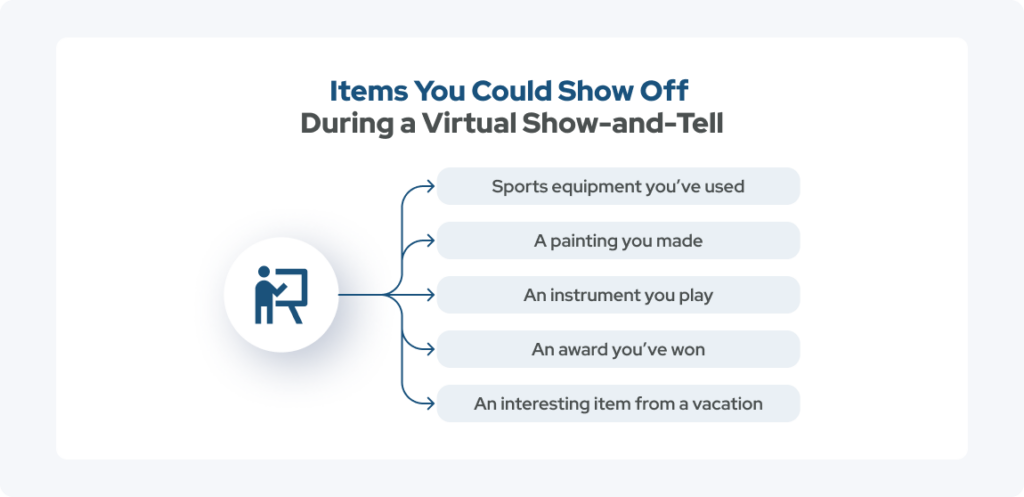
Most items shown during a grown-up version of show-and-tell fall into one of these four categories:
- Hobby items
- Professional achievements
- Sentimental souvenirs
- Visual art
By allowing their teams to showcase items from the categories above, companies can humanize their workers and build cross-team relationships through shared experiences.
Nevertheless, participation should remain flexible. One person might go really in-depth with their item, while another does something quick, casual, and off-the-cuff. That flexibility is part of what makes the format so effective.
3. Online Multiplayer Games That Encourage Team Interaction
Interactive games are a reliable way to introduce energy and collaboration into virtual corporate events. Game-based events shift focus away from forced interaction. Instead of solely trying to network, participants can engage through gameplay, fostering more organic communication.
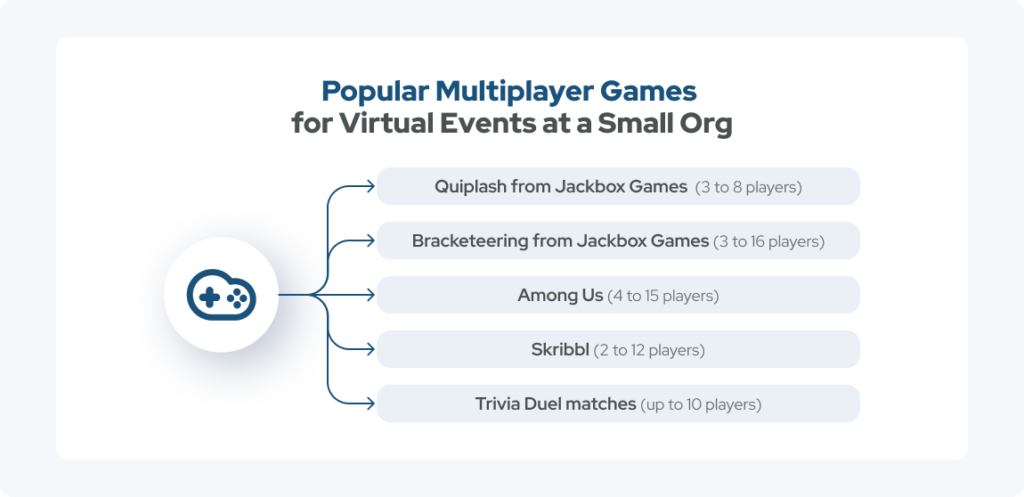
You should pick lightly competitive games that are easy to learn and encourage teamwork and strategy. Games that leave room for natural conversation and humor are especially effective. Some examples of games that collystring has played as a team are:
For Jackbox games, we recommend using the “family-friendly” filter in the game’s settings to ensure all prompts remain safe for work.
When running game-based virtual events, keep sessions between 30 and 45 minutes to preserve people’s energy and focus. If there is a limited number of players, be sure to rotate participants and allow spectators when applicable to encourage broader participation.
4. Incentivized Activities Like a Shout-Out Raffle
Incentives can significantly increase engagement without making participation feel mandatory. For example, collystring has a Slack channel dedicated to shouting out coworkers for their wins and hard work—both the person who wrote the shoutout and the person who received it are entered into a monthly raffle for a chance to win a monetary prize. We use tools like the Wheel of Names to make drawings more interactive.
You can take the approach we use for our shout-out raffle and apply it to virtual events, giving participants a chance to win something for joining. Aside from money, some other incentives you can use are:
- Gift cards
- Extra PTO
- Free meals
- Tech accessories like headphones
With prizes like the ones above, you’re bound to see engagement skyrocket while still maintaining a relaxed atmosphere.

Balancing Structure and Flexibility in Virtual Events
The most successful virtual events strike a balance between planning and spontaneity. Three strategies that should be interwoven into your virtual event planning are:
- Mixing structured segments with open conversation
- Keeping agendas short and adaptable
- Encouraging employee input for future events
These strategies will help you maintain direction without removing the natural flow that makes events enjoyable and better able to strengthen company culture in a remote environment.
Rethinking Virtual Events for Modern Teams
Companies do not need elaborate or expensive productions to create meaningful virtual experiences. In fact, many effective corporate events are relatively low-cost and easy to organize; all it takes is a little bit of creativity, friendly competition, flexible participation, and an opportunity for genuine conversation.
Thoughtful virtual event planning can reduce isolation in remote environments and improve cross-team communication, leading to better performance and stronger business outcomes—our team at collystring is a perfect example of this.
Our virtual events have strengthened our internal capabilities, making us a stronger agency. With our smooth interdepartmental communication, we can easily bounce ideas off each other and leverage each other’s skills, making collystring a powerhouse in digital marketing. Check out some of our case studies to see the work we can do together.
If your organization is looking to improve its digital presence, connect with collystring for a free audit and roadmap.